A Beginner's Guide to Buying Second-Hand Furniture Safely
October 09, 2026 - DIY

October 09, 2026 - DIY

October 05, 2026 - Interiors

October 01, 2026 - Inspiration
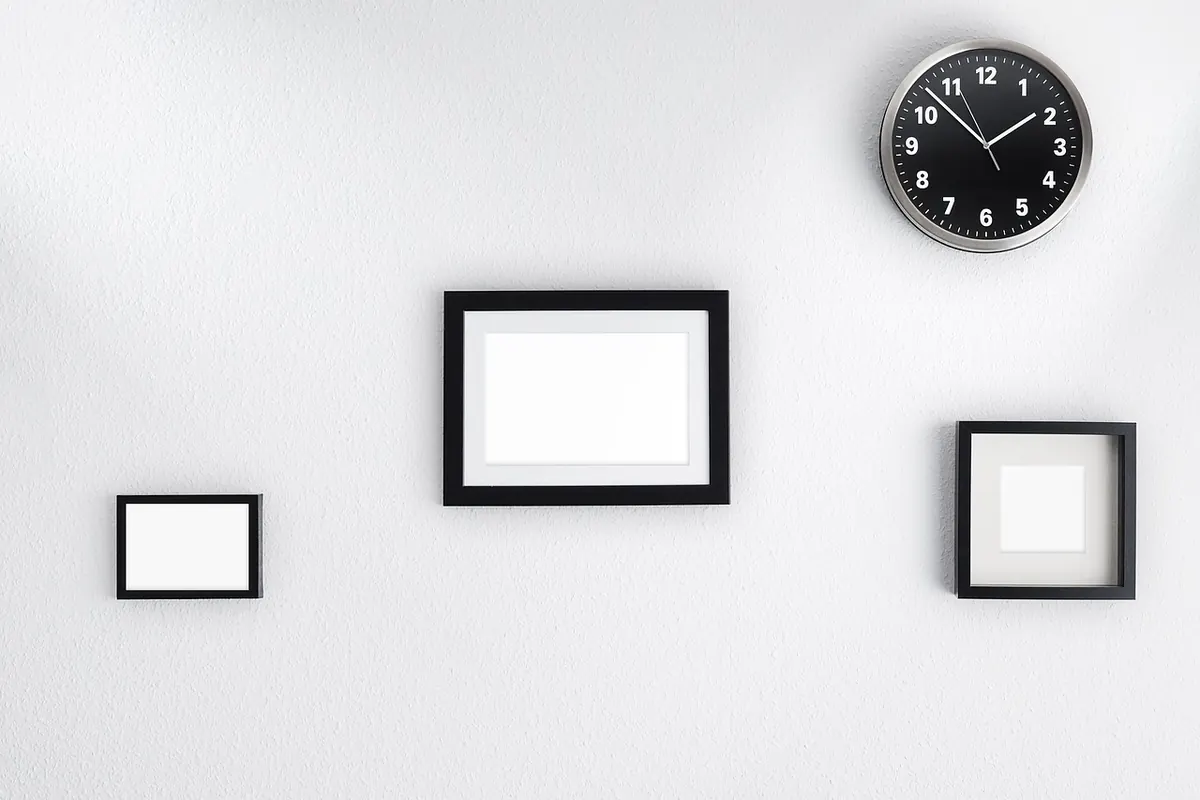
A small room does not need less personality. It needs better placement. Wall decor has an outsized effect on how spacious a room feels, and the things that shrink a space are rarely dramatic. They are small miscalculations: art hung a few inches too high, a gallery wall that grew one frame too many, a heavy black frame on a narrow stretch of wall. None of these are expensive to fix, and most can be sorted in an afternoon with a tape measure and a pencil. Here are the seven mistakes worth checking first.
This is the one that undoes more rooms than any other. A picture hung near the ceiling line looks like it is trying to escape the room, and it leaves a dead strip of bare wall beneath it that makes the ceiling feel lower than it is.
A useful guideline: place the centre of the artwork roughly 145cm from the floor. That sits at or just below eye level for most adults, and it works in almost every room. If the art hangs above furniture, the relationship matters more than the number — the bottom edge should sit about 15–25cm above the sofa back, sideboard or console. Measure before you drill, then hold the piece up and step back to check. A pencil mark costs nothing; a wrong hole in plaster does not.
A single modest print on a broad, empty wall does not read as understated. It reads as a mistake, and it makes the wall look wider and emptier than it did before you hung anything.
As a rough guide, artwork placed above furniture should span about two-thirds of the width of the piece below it. On a wall with nothing under it, one generous piece almost always looks better than a scatter of small ones. If you already own something too small, give it a wide mount and a larger frame, or group two or three pieces into a tight cluster so the group reads as one shape.
Art that floats 60cm above a sofa looks untethered, as though it might drift off. The eye reads the gap as a void, and the room feels oddly top-heavy.
Bring it down or fill the space deliberately. A shallow picture shelf, a slim console or a row of small pieces below the main artwork can bridge the gap. What you are avoiding is the awkward in-between zone where the art is neither attached to the furniture nor part of the wall above.
More is not automatically cosier. When every surface carries something — frames, a clock, a mirror, a shelf, a hanging plant, a woven wall hanging — the eye has nowhere to rest, and a busy wall makes a small room feel tight.
Some rules that keep a wall generous rather than cluttered:
Boxed sets of four identical prints in identical frames are easy to buy and easy to regret. They form a flat block that sits on the wall rather than belonging to the room, and repetition of size and colour flattens the sense of depth.
Mix sizes, shapes and frame finishes instead. Add one piece that is not rectangular — a woven textile, a shallow ceramic plate, a small round mirror. A single dark frame among pale wood or metal ones gives the arrangement somewhere to land. The aim is a collection, not a catalogue page.
Most of us hang art on the wall behind the sofa, then live facing the empty one opposite. Think about sightlines instead of symmetry. Sit where you actually sit — on the sofa, in bed, at the desk — and notice which blank expanse fills your view. That is the wall worth investing in.
Awkward walls deserve attention too. A narrow strip beside a doorway can take a tall, slim piece; the wall at the top of the stairs can hold a small cluster. Treat corners as opportunities rather than leftovers.
Chunky dark frames, dense black gallery walls and deep floating shelves all add visual weight, and in a compact room that weight presses inwards. So does an oversized mirror in the wrong place — one that reflects a dim corner, a cluttered surface or a blank wall doubles whatever is in front of it.
Lighter frames, or frames painted to match the wall, help the artwork sit back and let the room breathe. If you are using a mirror to add light and depth, position it so it catches a window, a bright wall or an open view. It will make the space feel roughly twice as generous — provided what it reflects is worth seeing twice.
Good wall decor in a small room comes down to restraint and relationship: how each piece sits with the furniture beneath it, the light around it and the person looking at it. Get the height, scale and spacing right, and the room will feel larger for it — without moving a single wall.
Photo: BenediktGeyer / Pixabay
A practical guide to buying second-hand furniture: how to measure, inspect and question before you commit, plus...
North-facing rooms needn't feel cold or dingy. Here's how warm colour, layered lighting, mirrors and texture can...
October 09, 2026 - DIY
October 05, 2026 - Interiors
Copyright © 2026 Amber Nest. All Right Reserved.