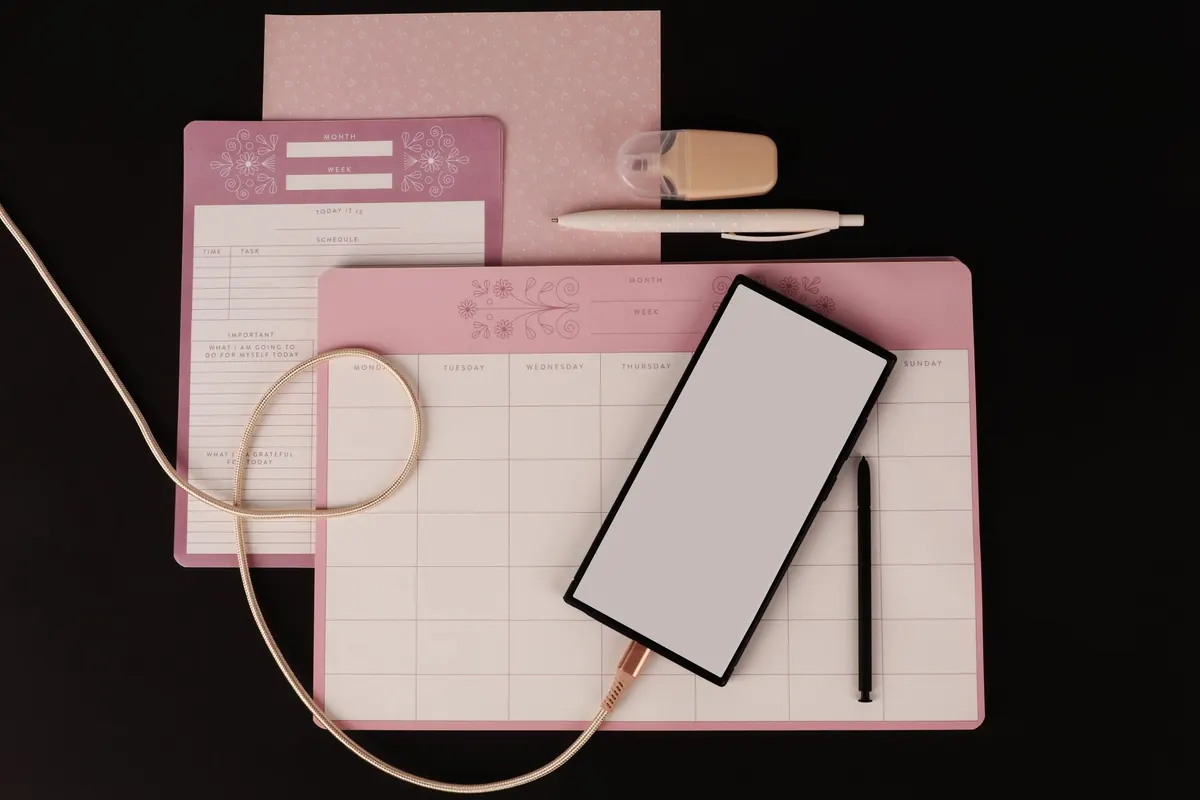
Most note-taking systems collapse for a dull reason: they were designed for someone with forty spare minutes and endless patience. The people who keep notes for years tend to do something much smaller. They spend about ten minutes a day, at roughly the same time, and they never let the pile grow tall enough to feel like a chore.
Ten minutes will not capture everything. That is the point. A small habit you keep beats a thorough system you abandon by February.
Why Ten Minutes Is Enough
A note only earns its keep when you read it again. Capturing is cheap; finding things later is where the value sits. So the daily routine should lean towards reviewing and acting, not typing.
Ten minutes also forces decisions. With a free afternoon you file, tag and colour-code. With ten minutes you keep the three notes that matter and delete the rest. That ruthlessness is what makes the habit survive a busy week.
Think of it as a daily tidy-up rather than an archive. You are not building a museum of your thoughts. You are keeping the desk clear enough to work at tomorrow.
Set Up Your Capture Point Once
Decide where notes go before you need to write one. Two rules matter far more than the app or notebook you choose:
- One place only. Every quick thought, task and snippet lands in the same inbox. Two inboxes means one inbox you ignore.
- Almost no friction. It should open in a couple of taps, or sit open on your desk. If capturing takes longer than the thought itself, you will not bother.
Paper works. A notes app works. A single document on your laptop works. What does not work is deciding each time where a note belongs.
Leave the sorting for the daily session. Capture is not the moment to organise.
The Ten-Minute Daily Routine
Here is a routine you can run at the kitchen table, on a train, or in the last few minutes before you close your laptop. Use a timer for the first week; after a fortnight you will feel the shape of it.
- Minutes 1–3: empty your head. Write down everything still floating around from the past day — a question from a meeting, the name of a supplier, a decision you keep putting off, a book someone mentioned. Bullet points and fragments, no full sentences. Speed matters more than tidiness.
- Minutes 4–6: triage the inbox. Take yesterday's items, oldest first, and give each one a verdict:
- It takes under two minutes → do it now.
- It needs doing later → write it as a task with a date.
- It is reference material → file it under a topic.
- It is neither → delete it. Most items end up here, and that is healthy.
- Minutes 7–9: write one note properly. Pick the most interesting thing from the day and put it in your own words, two or three sentences at most. This is the note you will actually reread in six months.
- Minute 10: decide the first move. Write one line telling tomorrow-you where to start. Draft the supplier email before the 10am call. Then close the notebook.
That final minute is what turns a pile of notes into something that moves.
Write Notes You'll Actually Understand Later
The six-month test
Read a note back and ask whether it will make sense in six months. Budget meeting — Sam fails. Budget meeting, 12 March — Sam wants to cut print spend before the new financial year; I need to check the supplier contract first passes. Add the who, the why and the next step while you still remember them, because future-you will not.
One idea, one note
A note containing five unrelated thoughts is hard to find and harder to use. Split it. If you also keep a journal, that is fine — just give the actionable line its own home so it does not disappear into a paragraph about your morning.
Date everything, and use your own words. Copying a quote verbatim feels productive, but it leaves you with someone else's thinking in someone else's language.
The Weekly Sweep
Once a week, give the system fifteen minutes. Longer is fine, but fifteen is enough. Sit with the week's notes and ask three questions:
- What is still open? Anything with a date or a promise attached goes onto your task list now, not later.
- What belongs together? Move related notes into one project or topic note so you can find them as a set.
- What can go? Delete anything you have not used and will not use. A smaller archive is easier to trust.
This is also the moment to notice patterns: the same problem appearing three weeks running, a book you keep meaning to read, a decision you keep postponing. Notes are good at showing you your own repetitions.
When You Miss a Day
You will miss a day. Possibly a week. The habit is not broken, provided you do not try to catch up.
Do not backfill. Writing three days of notes from memory takes an hour and produces thin material. Do not double the next session either. Start with today's ten minutes and let the gap stay a gap.
If ten minutes feels impossible, shrink it to two: one line about the day, one thing to do tomorrow. The point is keeping the slot alive. A routine that survives a bad week is worth more than one that only works on good ones.
Attach the session to something you already do — the kettle boiling, the commute home, brushing your teeth at night. Existing habits make reliable anchors, and you will stop relying on willpower.
Start Tonight
Pick one place for notes and put it where you will see it. Set a reminder for a specific time rather than a vague evening. Tonight, spend ten minutes: three emptying your head, three sorting, three writing one proper note, one deciding where tomorrow begins.
Give it a week before you judge it. The first few sessions feel clumsy and you will over-write. By day seven the routine is often down to six minutes, and you have a short, readable record of the week plus a clear first move for tomorrow.
Ten minutes a day is not a grand system. It is enough.
Photo: cottonbro studio / Pexels