Somewhere between stepping onto the platform and stepping off at your stop, you get a stretch of time that belongs to nobody else. No meetings, no kettle, nobody leaning over your desk. On a good day that half hour is the most useful part of the working day. On a bad day it is twenty minutes standing between a rucksack and a stranger's elbow outside Crewe. Either way, it is time you can spend — as long as your note-taking doesn't depend on a table, a signal and both hands.
What a train journey is genuinely good at
Commuting time suits three kinds of work: catching things before they disappear, reading and marking up notes you already have, and deciding what today looks like. It does not suit long, careful writing, heavy editing or anything needing a large screen and a stable connection. Fighting the carriage on that front just leaves you frustrated by Watford.
Think of the journey as two speeds. In the first few minutes your head is still full of the morning — the email you didn't answer, the form you need to sign. Later, once the rhythm of the track settles in, you can read and think more slowly. Set the journey up to match.
Build a capture kit you can use one-handed
Every system that survives contact with rush hour is simple to start. If writing something down takes more than a few seconds, you will stop doing it by Wednesday.
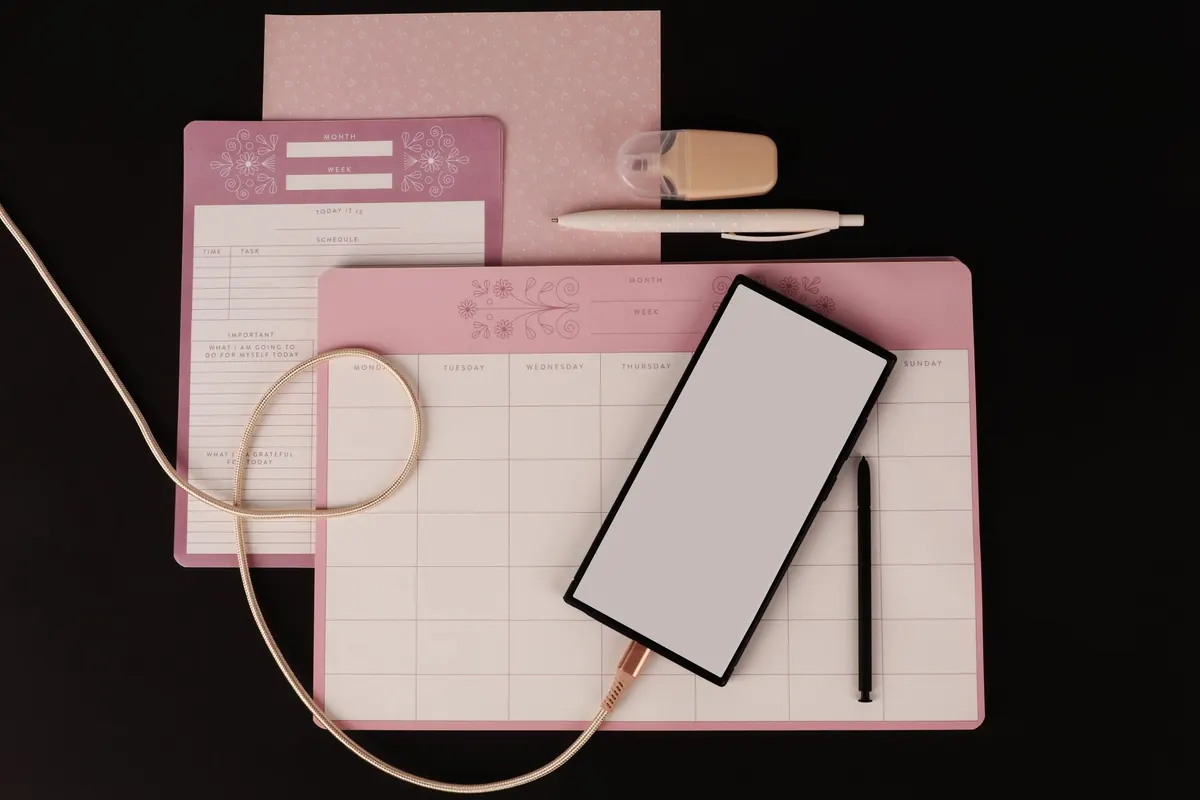
- A6 notebook with a stiff cover. Small enough for a coat pocket, firm enough to write on against your knee.
- One pen, clipped to the cover. Not loose in a bag with a laptop charger and a banana.
- One notes app, set up to work offline. Know exactly where new notes go before you lose signal in a tunnel.
- A visible shortcut. A widget on your home screen beats hunting through folders while holding a rail.
- A slim wallet or folder for the receipt or card you will otherwise find crumpled on Friday.
One inbox, no filing on the move
Decide where everything lands: a single note or notebook section called Inbox. Sorting happens later, at a desk, with a cup of tea. The moment you start choosing between four notebooks and three project folders on a moving train, you have turned capture into a decision — and decisions are what stop people writing things down.
Quick capture: the first ten minutes
Sit down, write the date and the journey at the top of a fresh page — "Tue 14 Jan, 07.42 Leeds to Sheffield" is enough. Then do a short sweep in three parts.
- Empty your head. Anything unfinished goes down as a bullet: the school form, the invoice, the present for your sister, the call you owe the landlord.
- Note yesterday. One or two lines about what happened and what needs following up. Not a diary — just enough to jog you later.
- Look at today. Anything with a time attached: the 11.00 call, the parcel collection, the fact you need to leave the office by 17.30.
A page of short bullets is plenty. Use a couple of marks and stay consistent: an arrow for "follow this up", a question mark for "unclear", a star for "important". Two marks you actually use beat ten you forget.
Reading notes on the move
Train reading works best when you are reviewing, not producing. Treat it as two passes. On the first, only mark: a line in the margin, a star, a tick. Resist writing anything longer than a few words. On the second pass, work through what you marked and write one sentence in your own words for each point. That sentence is the part that sticks; a copy of someone else's paragraph does not.
On a phone or tablet, highlight and add a brief comment rather than retyping text. If you are standing, read and think — leave the writing until you have a seat. Trying to annotate with one thumb while braced against a door is how notes get lost.
Plan the day before you arrive
Do your planning in the last ten minutes of the journey, not the first. You will step off with a clear head rather than a list you have already spent forty minutes worrying about.
Keep it to two lists. First, the three things that must happen today — and for each one, the smallest first action. "Open the Davies file and read the last email" is a first action; "sort out Davies" is a wish. Second, everything else, one line each.
Then check the diary against reality: the 09.30 meeting, the walk from the station, the gap between two calls when you could post the parcel. Ten minutes here saves a scrambled first hour at your desk.
When the carriage is against you
- No seat. Thumb-typing on a phone, one note, short lines. Or accept it and think through one problem deliberately.
- No signal. Use an offline-first app and a paper notebook. Everything syncs later; nothing is lost.
- Noise. Many intercity services have a quiet coach, worth booking if you can. Noise-cancelling headphones without music are also a fine way to buy silence.
- Short hops. If your journey is eight minutes, use the wait on the platform instead. A two-minute note under the departure board is not a failure; it is the whole habit.
If reading on a moving train reliably makes you feel unwell, keep to short notes and voice memos, look up often, and avoid the bendy sections where you can. Travel sickness that affects you regularly is worth mentioning to a pharmacist or your GP rather than pushing through.
A routine that survives a bad week
Two habits are enough. Three minutes of capture when you sit down; five minutes of planning before your stop. Everything else — reading passes, project notes, sorting — is a bonus for the days when the journey is long and the seat is good.
When you miss a day, nothing breaks. The inbox waits. Clear it once a week, on a Friday afternoon or a Sunday evening, moving items into whatever lists or apps you keep. That single tidy-up is what stops the notebook becoming a graveyard.
Start tomorrow morning
Tonight: put a small notebook and a pen in your bag, and create one note on your phone called Inbox. Tomorrow, on the train, write the date and the journey, then three bullets from your head. Before your stop, write the three things that must happen today, each with a first action.
That is the entire system. Keep it for a fortnight and you will learn more about how you work than any productivity overhaul will tell you — and you will have used time you were spending anyway.
Photo: Rayhan Ansari / Pexels