A commonplace book is a single notebook for material worth keeping: a sentence from a novel, a scrap of conversation overheard on a bus, the shape of a half-formed idea you can't use yet. It isn't a diary and it isn't a journal. It's more like a store cupboard. The point is not to record your life but to collect raw material you can draw on later — when a project stalls, when you need a title, when you want to think in a direction you haven't tried before.
Starting one takes about ten minutes and costs the price of a notebook. Keeping one is mostly a matter of lowering your standards for what deserves to go in.
What it is, and what it isn't
Keep the distinction clear and the habit becomes much easier. A diary is chronological and personal: this happened, then that happened. A commonplace book is thematic and mixed. Other people's words and your own notices sit side by side, sometimes on the same page, often in no order at all.
It is not a to-do list, a reading log, or an archive of finished thoughts. It is a working pile of material, and it is allowed to be scruffy. If you find yourself worrying about neatness, you have probably started treating it as a finished object rather than a toolbox.
Why one notebook beats scattered notes
Most people already collect things — a note on their phone, a screenshot, a line underlined in a paperback, a scrap of paper in a coat pocket. The problem is that these fragments never meet. A quote you saved in March has no way of bumping into an observation you made in June.
Value comes from adjacency. When a line about tides is written three pages from a note about your grandmother's kitchen, you start to notice a connection you would otherwise have missed. A single book forces those collisions. Writing by hand helps too: it is slow enough that you have to decide whether something is worth the twenty seconds it takes to copy out.
Choose a book you'll actually carry
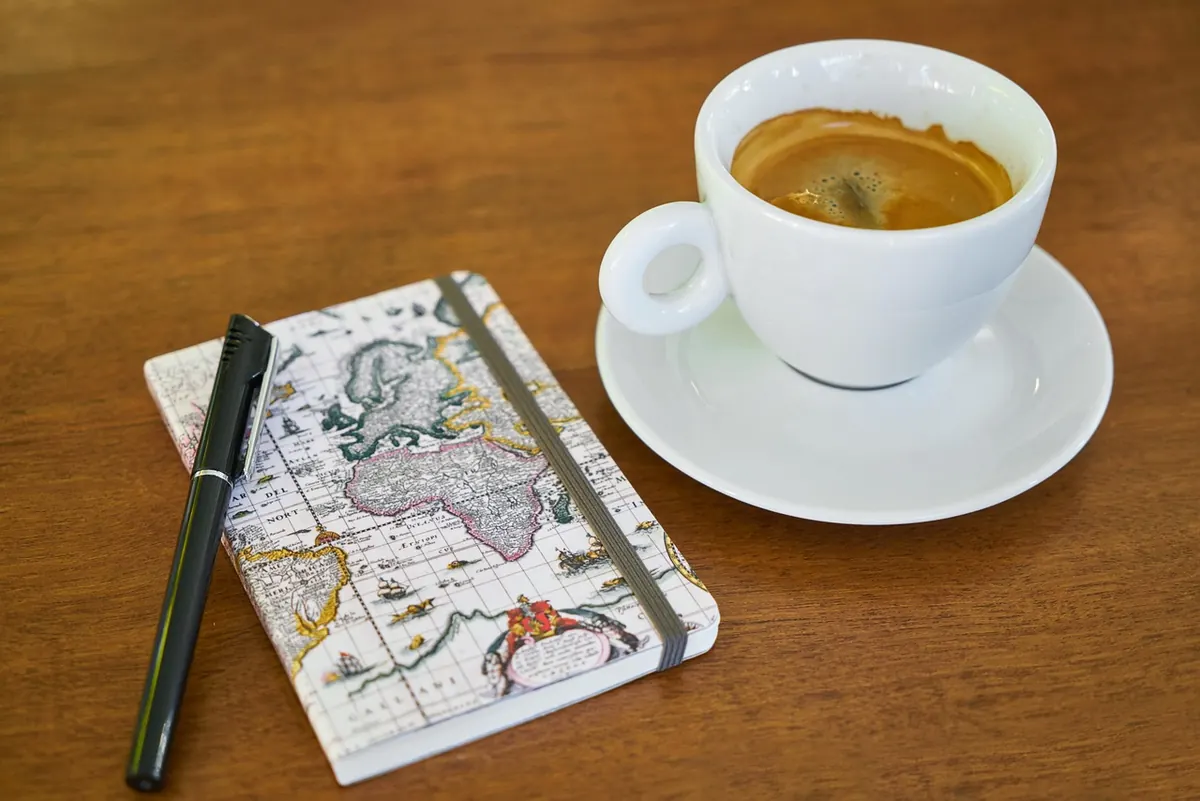
Almost any notebook works. The one you'll use is the one that suits where you already sit and walk.
- A5 hardback, lined or plain. The default choice. Big enough for a paragraph, small enough for a coat pocket.
- A6 pocket notebook. Good if you're out and about. Expect to copy entries into a larger book later, or simply keep a shelf of small ones.
- A4 ring binder. Useful if you paste things in: printouts, ticket stubs, a page torn from a magazine. You can rearrange it, which suits some people and paralyses others.
- A cheap exercise book. Underrated. If the notebook feels precious, you'll write less in it.
Whichever you pick, leave a margin. A third of the page down the outer edge gives you somewhere to add a keyword, a question mark, or a note to your future self. A book with no margins is a book you can't annotate.
Set up three things, then stop fiddling
There is no official system, but three small habits make the difference between a notebook and a usable one.
- An index. Number the first twenty or thirty pages, then keep an index at the back. When you add an entry, write its page number and one keyword: lighthouses, interviews, opening lines. This is the single thing that turns a pile into a reference.
- A date. Small, in the corner. Not for sentiment — it helps you see how your interests move over a year.
- Two or three marks. Not a colour-coded taxonomy. A dot in the margin for something you want to use, a question mark for something you don't understand yet, a star for anything you've copied twice from different sources.
What to collect
Beginners often freeze because they're waiting for something brilliant. Ordinary material is the point. Anything that makes you pause for two seconds qualifies.
- Lines from books, with the title and page number. A quote without a source is a dead end.
- Overheard speech: a phrase, a local word, the way someone ordered a coffee.
- Descriptions of places. Weather, light, a smell, the sound a shop door makes.
- Questions you can't answer yet, written as questions.
- Names of things — tools, plants, knots, forgotten jobs, pub signs.
- Patterns. The same idea arriving twice in a week from unrelated directions.
- Fragments of your own thinking, two lines maximum. Longer than that and it belongs in a draft, not here.
- Diagrams, sketches, lists of five.
Add a line of context when it matters. "Man in the queue, Bristol, said his father kept bees on a balcony" is worth ten times more than the bare quote, because in a year you'll have forgotten who said it or where you were.
Make it reusable
Collecting is only half the practice. The other half is reading it back.
The monthly read-back
Once a month, sit down with the book for fifteen minutes and read the last few weeks. Copy anything still interesting onto a fresh page near the front, under a heading like Live. Everything else stays where it is, available but dormant. This is how a commonplace book stays a working document instead of a graveyard.
Cross-reference as you go
When you notice two entries speaking to each other, write the page number of one next to the other. That's the whole system. Over a year, those little numbers become a map of what you actually think about, which is rarely what you assume you think about.
Four habits that quietly kill it
- Transcribing too much. Copying a whole page is a way of avoiding the decision about what mattered. Take the one line that stopped you.
- Being tidy. Nobody is marking this. A messy page you use beats a beautiful one you're frightened of.
- Saving it for special. If you only write down profound things, you'll write twice a month and stop by March.
- Never taking anything out. If nothing ever leaves the book, you're hoarding rather than collecting.
Start tonight
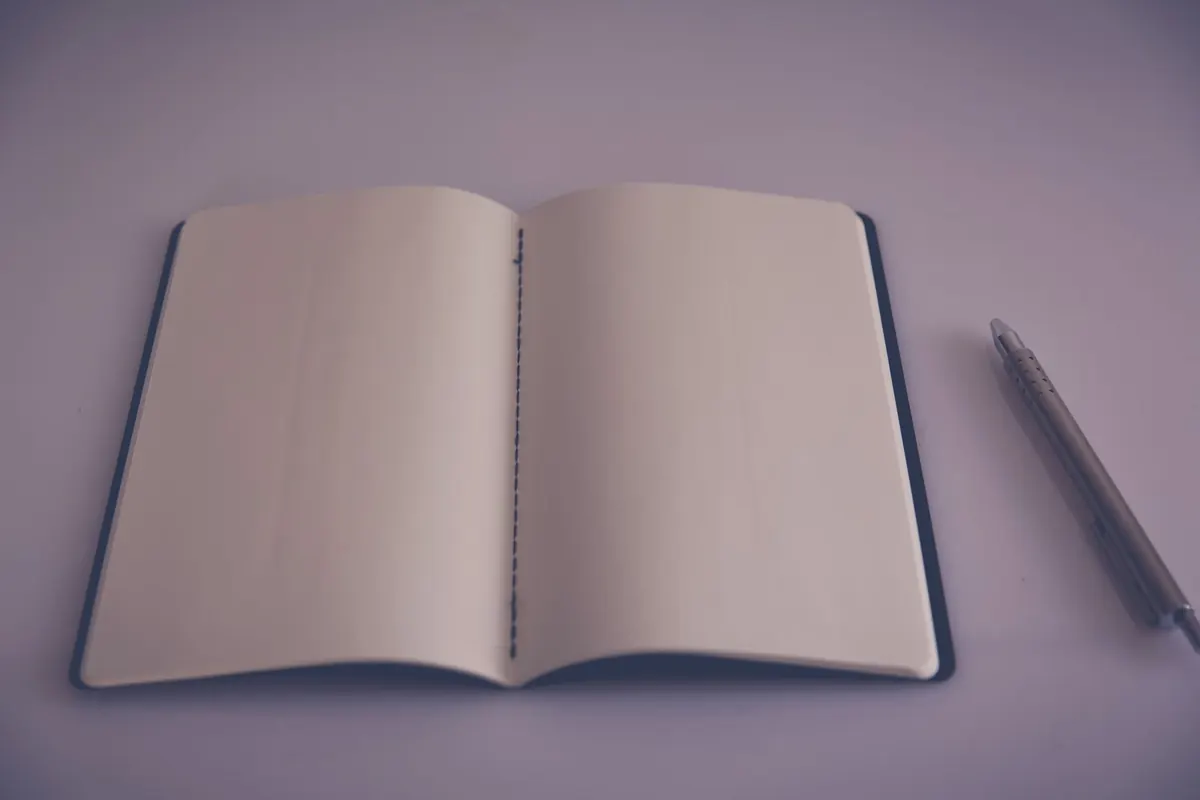
Find a notebook — any notebook. Open it to the first page, write today's date, and add three things: a line you read today, something you heard, something you noticed on the way home. Then number the next twenty pages and start an index in the back.
That's it. Tomorrow, three more. Within a month you'll have forty or fifty entries and, more usefully, the beginnings of an instinct for what's worth keeping. Within a year you'll have a small private library of other people's sentences and your own sharpest noticing — and something to open whenever you need to make a start on anything.
Photo: Markus Spiske / Pexels